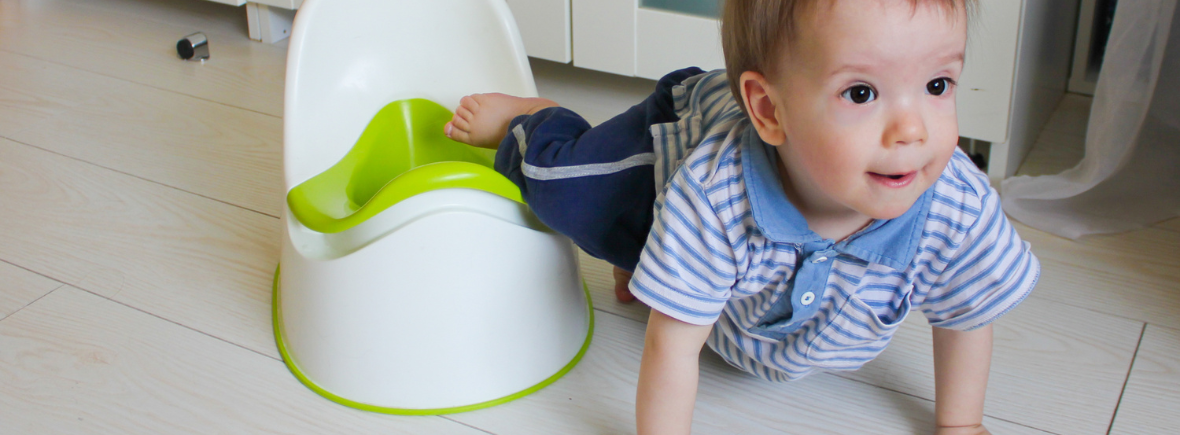
Many children struggle with the transition from nappies to Potty Training, but this can be prevented if you familiarise your child with the potty right from the start. Nurse Rebecca Mottram, author of The Baby Pottying Guide explains how to prevent potty problems.
One of the cons of using disposable nappies is that they wick away wee so rapidly that your child is blissfully unaware that anything has happened, it just disappears like magic. They may notice that they have done a poo but will quickly learn that the place poo happens is in their nappy and that they don’t get involved: someone wipes them and takes it away.
Fast forward to the day when the parent decides it’s time to stop using nappies… the child has to very quickly learn over 40 toileting skills all at once. They must change the habits of a lifetime and start paying attention to bodily functions that they have been completely disconnected from. Then they need to communicate their needs, remember that wee and poo now goes in a different place and learn how to stop what they are doing, quickly get to that place, undress, get on the toilet, wipe, flush wash hands, get dressed again. It’s a steep learning curve and lots of children really struggle to process these changes. Particularly if they begin during those stubborn toddler years where transitions between activities are much harder and they are already learning so many other things.
.
What potty problems can be prevented by proper preparation?
If your child is struggling to process the transition to potty training, this can manifest as different behaviours:
– Fear or anxiety about using the potty/toilet
– Wee witholding (leading to urinary tract infections)
– Poo witholding (leading to constipation)
– Resistance or refusal to use the potty/toilet
When these potty issues present, parents are often told its because their child isn’t “ready” and they should delay potty training. Readiness is a myth perpetuated by disposable nappy manufacturers to encourage parents to buy their products for longer. The reality is that children are born ready to begin practising potty skills and in fact prolonged nappy use can lead to bladder and bowel issues.
If your child is struggling with potty issues, you should seek professional guidance. Request a private consultation.
Familiarising your baby with the potty
Baby Pottying is also known as natural infant hygiene, elimination communication (or EC), potty whispering, infant potty learning or early potty training (though it’s not really potty training of course) and despite all the fancy terminology, it’s nothing new! It’s what we did for thousands of years of human history, up until around 70 years ago when disposable nappies were invented.
It involves learning your baby’s natural signals or timing so you can hold them over a potty or toilet. It can be done from birth, either some or all of the time and you can use nappies as a backup or not at all.
For some parents it can be an easy part of their daily routine to do the first catch when their baby wakes up with a full bladder, or offer the potty after breakfast for a poo. For some parents, this might only be manageable at the weekends, or in the evenings as part of a bedtime routine.
You can learn how to familiarise your baby with the potty by reading my book, The Baby Pottying Guide. It’s available in print or as an ebook.
Want a free baby potty skills guide?
You can download an extract from my book, The Baby Pottying Guide, which will help you to identify what potty skills your baby is currently capable of mastering at their particular stage of development.


Nurse Rebecca Mottram is an advocate for Baby Pottying and a potty training expert. She is the author of two books; The Baby Pottying Guide and Positively Potty, the host of the Go Potty Podcast and founder of the Little Bunny Bear shop. If you are trying to resolve a potty problem, you can explore Rebecca’s free resources, join her Facebook group or request a private consultation.