Many parents ask me at what age children are capable of wiping themselves independently. Knowing how to wipe effectively after a poo is a skill many parents leave until later to teach, and as a result they often find themselves helping to wipe for longer than is really necessary. So how and when should you start teaching this skill?
The truth is that wiping is one of the most complex toileting skills children develop. It requires body awareness, coordination, balance and confidence. Because of this, most children cannot manage it completely independently at the beginning of toilet training. Instead, wiping usually develops gradually over time as children become more aware of their bodies and more confident managing the different steps involved in using the toilet.
Learning to use the toilet well involves developing more than 40 different skills, with the most essential being body awareness and understanding that wee and poo must go in socially designated spaces (the bathroom!)
Optimal bowel health
One of the things I often encourage families to do is always look in the toilet. It sounds obvious, but many people don’t. Perhaps it’s something you don’t do yourself, because you’re not curious, not in the habit, or are frankly, disgusted. I get it, but…
Our poo and wee can tell us a surprising amount about our health. Its appearance can reveal hydration levels, constipation, digestion, infection and more. Helping children become familiar with this from an early age builds body awareness, confidence and independence.
So, start looking!
Seeing is understanding: a simple idea that makes a lot of sense
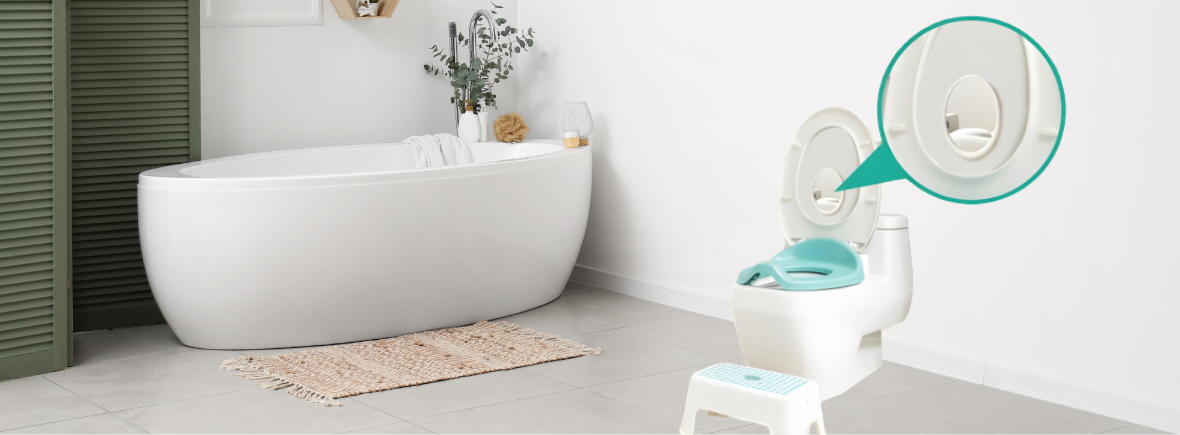
Recently I was sent The Original Toilet Mirror to try. I was curious about the idea because, although it’s very simple, it directly supports some of the practical skill development that children need as they learn to use the toilet independently.
The mirror attaches safely inside the toilet bowl and allows the person wiping to see what they are doing more clearly. Simply bend forward and look behind you and you can instantly see the exact area that needs cleaning after a poo (yes, that polite way of saying what you’re thinking, and there’s no need to feel embarrassed: we all have one).
Once the mirror is in place, it simply becomes part of the toilet environment. There’s nothing extra to remember, but it naturally acts as a visual reminder to wipe properly as well as check what’s in the bowl.
This small device can actually support several important toileting skills.

Encouraging children to check their poo and wee
Looking at poo and wee is actually an important health habit. I always encourage parents to know and look for signs of constipation, dehydration or illness. Helping children become familiar with this process supports lifelong awareness of bowel and bladder health. So, using the toilet mirror may help start useful conversations about what healthy poo and wee look like.
Supporting body awareness
Children learn best when they can see and understand what their bodies are doing. So being able to see exactly where poo from can help children connect with the result they see. This strengthens the body awareness that underpins successful potty learning. It also normalises anatomy and encourages children to become comfortable and familiar with their bodies.
It’s certainly true that getting to know your bottom is part of learning to look after it.
Helping children learn to wipe independently
Wiping is often one of the last toileting skills to develop. It requires coordination, body awareness and confidence. Many children struggle because they simply cannot see what they are doing. A mirror can help children understand where they need to wipe and when they are clean, reducing guesswork and frustration.
So one of the things I liked most is how this small tool could help some children manage more of the toileting process themselves. Many toddlers really value privacy and independence, and when they feel capable of doing things on their own it can be highly motivating.
Anything that gently supports that sense of competence is a positive step. Research shows that when children feel capable of managing things themselves, it taps directly into their developmental need for independence, which dramatically increases motivation and confidence.
Helpful for babies too
Interestingly, the mirror may also be useful for families practising early potty learning or elimination communication.
Babies who sit on the toilet with a seat reducer (often facing backwards towards the cistern) frequently enjoy looking at themselves in a mirror. It can act as a gentle distraction or source of interest while they sit. As babies are naturally fascinated by mirrors, this can make toilet sitting feel relaxed and enjoyable (which is exactly how it should feel).
Practical design
The mirror itself is:
- Easy to secure in place
- Well made and thoughtfully designed
- Simple to wipe clean
- Suitable for the whole family to use
It’s one of those inventions that feels novel at first, but the more you think about it, the more it simply makes sense. If you use the code GoPotty10 at checkout, you’ll get a 10% discount.
A quick note
I was sent this mirror to try, but I was not paid to write this review and I do not receive any financial commission or affiliate income if you purchase it. So what’s above is my informed opinion as a children’s nurse and potty learning expert.
And, I only recommend products that I feel are genuinely thoughtful, practical and aligned with supporting children’s development — and this one from such a great family business clearly comes from a place of wanting to make a positive difference. We need more of these types of people in the world!

Nurse Rebecca Mottram is an advocate for Baby Pottying and a potty training expert. She is the author of two books; The Baby Pottying Guide and Positively Potty, the host of the Go Potty Podcast and founder of the Little Bunny Bear shop. If you are trying to resolve a potty problem, you can explore Rebecca’s free resources, join her Facebook group or request a private consultation.